Conjugación del verbo cherish
Traducción: albergar, querer (persona), manterner (tradición), alentar, alimentar, acariciar, conservar, mantener, abrigar, apreciar, valorarConjugación un verbo regular [cherish]
La conjugación o flexión verbal es el conjunto de las distintas formas de los verbos. Con el cambio de sus formas, frecuentemente mediante los sufijos y palabras auxiliares, expresan las categorías gramaticales de los verbos como: persona, número, tiempo, aspecto, voz y modo. Según la forma de conjugación, los verbos se dividen en diferentes clases verbales, a los cuales se asignan paradigmas y según ellas se conjugan los verbos de la clase dada.
Distinguimos las formas verbales simples (por ejemplo, hacer, hago) y compuestos (por ejemplo, he hecho, habré hecho).
En total hay 12 tiempos básicos en inglés (El tiempo más comúnmente utilizado es probablemente el tiempo pasado). Sin embargo, teniendo una conversación normal con un nativo inglés o americano, no se encuentra con todos estos tiempos.
La forma de un verbo difiere significativamente cuando se trata de la conjugación de un verbos regulares o un verbos irregulares.
Condicional un verbo regular [cherish]
El modo condicional es el modo verbal por la cual se expresa que la realización de cierta acción o cierto estado están condicionados por ciertas circunstancias. También es posible usar el condicional para expresar una petición educada (por favor, ¿decirme…?).
En inglés, el condicional simple (presente) se forma usando el verbo auxiliar would y el verbo en la forma básica (el infinitivo).
Para formar el condicional perfecto (pasado) se usa el infinitivo pasado, es decir, la construcción would have + participio pasivo. En inglés es importante distinguir correctamente entre el condicional simple y perfecto.
Condicional presente
Condicional presente progresivo
Condicional pasado
Subjuntivo un verbo regular [cherish]
Subjuntivo (del latín tardío modus conjunctivus, en traducción el modo sirviendo a la estructura de oración, del latín conjungere – vincular, o en inglés subjunctive.).
El subjuntivo es el modo verbal que generalmente expresa la condicionalidad o la hipotética de la acción.
El subjuntivo expresa acciones posibles, probables, hipotéticas, deseables, temidas o necesarias (entonces así sirve para expresar la modalidad de actitud del hablante). Es el modo de las acciones pensadas que no tienen que pasar en ningún momento. Indica principalmente subjetividad, dudas o incertidumbre de la comunicación.
Subjuntivo pasado
Imperativo un verbo regular [cherish]
El modo imperativo o el imperativo es un modo gramatical que expresa mandatos, ordenes, peticiones o prohibiciones. En muchos casos el uso del modo imperativo puede sonar grosero y maleducado. Por eso, se suele usar una forma más amable en su lugar.
En la mayoría de los idiomas, el imperativo se usa principalmente en la segunda persona, a quién el hablante se dirija. En la expresión escrita, las oraciones en el modo imperativo se terminan de la siguiente forma:
- con el signo de exclamación, en caso de petición categórica (¡Vete enseguida!);
- en otros casos con el punto, en caso de petición educada (Por favor, abre la ventana.).
En inglés, el modo imperativo de la segunda persona (tanto singular como plural) encaja con el infinitivo (sin la partícula to):
- (to) do = hacer, do! = ¡haz! ¡hazte!
- En otras personas se parafrasea con la locución verbal del verbo let (dejar) y pronombre personal de caso objetivo, principalmente en la prima persona plural:
- let us (=let’s) go! = ¡vámonos!
Participio un verbo regular [cherish]
El participio (del latín participare – “tener presencia”) es una forma nominal indefinida del verbo que tiene funciones diferentes en el idioma:
- participación en la formación de los tiempos compuestos;
- participación en la formación de la voz pasiva;
- función del complemento;
- como alternativa para oraciones subordinarías (condensación de oraciones);
- y otros.
Los participios son a menudo la base para la formación de adjetivos (adjetivos deverbales), por ejemplo, comprar - comprado - comprado, pasar - pasado - pasado, y sustantivos (sustantivos deverbales) acompañar - acompañado - acompañamiento.
Artículos recientes
- Significado y ejemplos del participio pasado
- Verbos regulares en pasado participio en inglés
- Verbos irregulares en pasado participio
- 50 oraciones en pasado perfecto continuo
- Estructura del pasado perfecto continuo
Usa el botón "Selección aleatoria"
| Empezar a estudiar verbos irregulares: |
| Selección aleatoria = >> |
Verbos irregulares en inglés fácilmente y rápidamente!
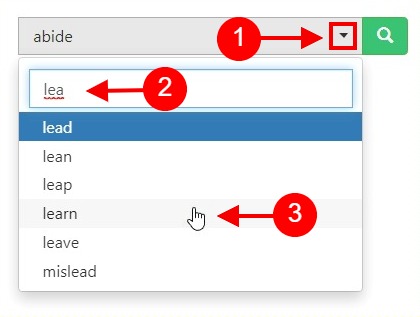
¿Estás buscando un verbo concreto?
Utiliza la búsqueda (el filtro)